

In the packaging industry, anti-static POF (Polyolefin) film has emerged as a crucial material, especially in environments where static electricity can cause significant problems. Static electricity can lead to a range of issues, including attracting dust and debris, causing damage to sensitive electronic components, and even creating safety hazards due to potential electrostatic discharges. As a leading supplier of anti-static POF film, we understand the importance of its performance, particularly in dynamic environments. This blog aims to explore the anti-static performance of anti-static POF film in such settings.
Understanding Anti-static POF Film
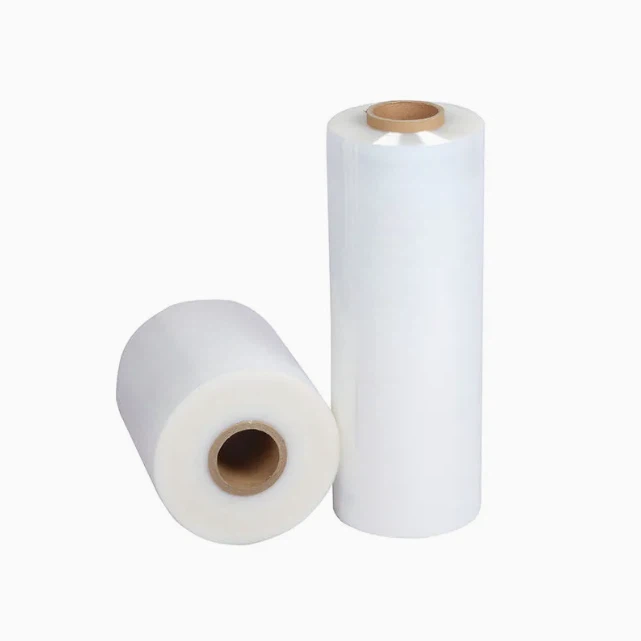
Anti-static POF film is a specialized type of polyolefin heat shrink film that has been engineered to reduce or eliminate the build-up of static electricity. This is achieved through the incorporation of anti-static agents either during the film manufacturing process or through a coating applied to the film's surface. There are different types of anti-static agents, including ionic and non-ionic compounds, which work by dissipating or neutralizing static charges.
Our company offers a variety of POF films, including Low Temperature POF Shrink Film, Hot Slip POF Shrink Film, and High Speed Soft POF Film, all of which can be equipped with anti-static properties to meet different customer needs.

Anti-static Mechanisms in a Dynamic Environment
In a dynamic environment, factors such as movement, friction, and air flow can generate static electricity. When two materials rub against each other, electrons are transferred from one material to the other, creating a positive charge on one surface and a negative charge on the other. In the case of anti-static POF film, the anti-static agents work in the following ways:
-
Surface Conductivity: The anti-static agents form a thin conductive layer on the film's surface. This layer allows charges to move freely across the surface, preventing the build-up of static charges. For example, when the film is moving through a packaging machine, the conductive layer ensures that any charges generated by friction are quickly dissipated.
-
Humidity Dependency: Some anti-static agents are hygroscopic, meaning they attract and retain moisture from the surrounding environment. The moisture helps to increase the surface conductivity of the film, enhancing its anti-static performance. In a dynamic environment, where air movement can affect humidity levels, it is important to choose an anti-static agent that can maintain its effectiveness over a wide range of humidity conditions.
Factors Affecting Anti-static Performance in a Dynamic Environment
Several factors can influence the anti-static performance of anti-static POF film in a dynamic environment:
-
Friction and Movement Speed: Higher friction and faster movement speeds can generate more static electricity. For instance, in high-speed packaging lines, the film is subjected to rapid movement and friction against various machine components. Our anti-static POF film is designed to withstand these conditions, with anti-static agents that can effectively dissipate charges even at high speeds.
-
Temperature and Humidity: Temperature and humidity can have a significant impact on the performance of anti-static agents. In low humidity environments, the effectiveness of hygroscopic anti-static agents may be reduced. Our company conducts extensive research and development to ensure that our anti-static POF film maintains its performance across a wide range of temperature and humidity conditions.
-
Contact with Other Materials: The type of materials the film comes into contact with can also affect its anti-static performance. Different materials have different triboelectric properties, which determine the amount of charge transfer that occurs during contact. Our anti-static POF film is tested against a variety of common materials to ensure compatibility and optimal anti-static performance.
Testing the Anti-static Performance in a Dynamic Environment
To evaluate the anti-static performance of our anti-static POF film in a dynamic environment, we conduct a series of tests:
-
Surface Resistance Testing: Surface resistance is a key indicator of a film's anti-static performance. We use specialized equipment to measure the surface resistance of the film under dynamic conditions, such as during movement through a simulated packaging line. A lower surface resistance indicates better anti-static performance.
-
Charge Decay Testing: Charge decay testing measures how quickly a static charge on the film's surface dissipates. We apply a known charge to the film and measure the time it takes for the charge to decay to a certain level. This test helps us to assess the effectiveness of the anti-static agents in a dynamic environment.
-
Dust Attraction Testing: In a dynamic environment, static electricity can attract dust and debris. We conduct dust attraction tests by exposing the film to a controlled environment with dust particles and measuring the amount of dust that adheres to the film's surface. A film with good anti-static performance should attract less dust.
Applications of Anti-static POF Film in Dynamic Environments
The anti-static properties of our POF film make it suitable for a variety of applications in dynamic environments:
-
Electronics Packaging: In the electronics industry, static electricity can damage sensitive electronic components. Our anti-static POF film is widely used for packaging electronic products such as circuit boards, semiconductors, and consumer electronics during transportation and storage.
-
Food Packaging: In food packaging, static electricity can attract dust and other contaminants, which can affect the quality and safety of the food. Our anti-static POF film provides a clean and static-free packaging solution for food products, especially in high-speed packaging lines.
-
Medical Packaging: In the medical industry, static electricity can pose a risk to the sterility of medical devices and products. Our anti-static POF film is used for packaging medical supplies, ensuring that they are protected from static-related contamination during handling and transportation.
Conclusion
As a supplier of anti-static POF film, we are committed to providing high-quality products that offer excellent anti-static performance in dynamic environments. Our research and development efforts focus on improving the effectiveness of our anti-static agents, ensuring that our film can withstand the challenges of various dynamic conditions. Whether you are in the electronics, food, or medical industry, our anti-static POF film can provide a reliable packaging solution.
If you are interested in learning more about our anti-static POF film or would like to discuss your specific packaging requirements, please feel free to contact us for a consultation. We look forward to working with you to find the best packaging solution for your needs.
References
- ASTM D257 - Standard Test Methods for DC Resistance or Conductance of Insulating Materials.
- ISO 1853 - Determination of surface resistivity, volume resistivity and surface tension of insulating materials.
- Industry reports on anti-static materials and their applications in packaging.